• Home
  • About
    • Bio
    • Artist Statement
    • Teaching Philosophy
  • embodied research
    • solo work >
      • Bachué
      • redmoonwhitemoonbluemoon
      • Cattleya
    • Collaborations >
      • KOAN
    • site-specific investigations
  • Social Practice
    • cultural organizing
    • dance/performance >
      • transfronteriza
      • Braiding Borders
      • fall/fallen/falling
  • Contact
SPLR

Improvisation and Play

4/22/2019

 
On November 11, 2018 I was an invited panelist in the webinar  Play: A Luxury for the Privileged or a Necessity for All? Play, Development & Social Justice offered by the East Side Institute for Group and Short-Term Psychotherapy (NYC). This conversation invited us to ask incredible important questions such as: Given that play is what leads to creativity and innovation, why is play increasingly less accesible? Who has the "time" or "right" to play? In what spaces is play present? 

As a performance activist and play revolutionary, I believe play needs to be at the forefront of our social justice work and conversations. Want to know why? Check out the video below.
El 11 de noviembre de 2018 fui una panelista en el seminario web Juego: ¿Un Lujo Para los Privilegiados o una Necesidad Para Todos? Juego, Desarrollo y Justicia Social ofrecido por el East Side Institute (NYC). Esta conversación nos invitó a hacer preguntas importantes como: Dado que el juego es lo que conduce a la creatividad y la innovación, ¿por qué el juego es cada vez menos accesible? ¿Quién tiene el "tiempo" o el "derecho" para jugar? ¿En qué espacios está presente el juego?

Como activista de performance y revolucionaria del juego, creo que el juego debe estar a la vanguardia de nuestro trabajo y conversaciones sobre justicia social. ¿Quieres saber por qué? Mira el video de abajo.

Improvisation and the Imaginal

4/5/2019


on the imaginal & the sacred
The path I have been on during my MFA has opened my interpretation of what is sacred and has helped me see the imaginal also within this realm. Having such a deep interaction with imagination in my Action Theater training, I have become increasingly interested in exploring the relationship between the imaginal world and the present moment. In my Buddhist meditation studies over the past 14 years, this realm of experience has been completely left out of what inhabits the present moment as if to say that what we can’t perceive through our five senses is not part of this moment. But who are we to say that what is available outside of our fields of sensory perception doesn't manifest in our imagination? Most of us are limited in what we can perceive through our senses, but I do believe that there is more that we can have access to, even if those are things that we can’t name. ​

In Unlearning to See the Sacred, Jeremy Hayward characterizes this unseen world as the “intermediate realm” which gives voice to the “vast realm of real human experience” that we deny in our materialistic worldview (66).  This broad space, nested in-between the extreme opposite levels of the material/ physical and the “transcendent being or nonbeing,” is where our ancestors, animal spirits and the fairies reside. Hayward argues that our access to this realm is “closely related to awareness in direct experience” (67) and our ability to perceive it “depends to a surprisingly large extent on what we believe: on our vision of our world and what it is made of” (63). His invitation to open our hearts to something bigger, to “pay attention to stories...our own feelings [and] our own sense of wonder and magic” (70), to recognize that “our world is imbued with living vital energy” and to dive in to be fully part of it and appreciate its fullness, is an encouraging one as it is where my journey is leading me (72). I am diving head first into a path of gratitude, discovery, unlearning, and remembering. Into a sense of belonging in a broader world full of magic and possibility.


​sobre lo imaginario y lo sagrado

El camino en el que he estado durante mi Maestria en Bellas Artes ha abierto mi interpretación de lo que es sagrado y me ha ayudado a ver lo imaginario dentro de este ámbito. Al tener una interacción tan profunda con la imaginación en mi entrenamiento en Teatro de Acción, me he interesado cada vez más en explorar la relación entre el mundo imaginario y el momento presente. En mis estudios de meditación budista durante los últimos 14 años, este ámbito de experiencia se ha dejado por fuera de lo que habita el momento presente, como insinuando que lo que no podemos percibir a través de nuestros cinco sentidos no es parte de este momento. Pero, ¿quiénes somos para decir que lo que está disponible fuera de nuestros campos de percepción sensorial no se manifiesta en nuestra imaginación? La mayoría de nosotros estamos limitados en lo que podemos percibir a través de nuestros sentidos, pero creo que hay más cosas a las que podemos tener acceso, incluso si esas son cosas que no podemos nombrar.

En Desaprendiendo Para Ver lo Sagrado, Jeremy Hayward caracteriza este mundo invisible como el "reino intermedio" que da voz al "vasto ámbito de la experiencia humana" que negamos en nuestra cosmovisión materialista (66). Este amplio espacio, anidado entre los extremos opuestos del material / físico y el "ser (o no ser) trascendente", es donde residen nuestros antepasados, los espíritus animales y las hadas. Hayward sostiene que nuestro acceso a este reino está "estrechamente relacionado con nuestra conciencia en la experiencia directa" (67) y que nuestra capacidad para percibirlo "depende en gran medida de lo que creemos: de nuestra visión de nuestro mundo y de lo que está hecho" (63). Su invitación a abrir nuestros corazones a algo más grande, a "prestar atención a las historias ... nuestros propios sentimientos [y] nuestro propio sentido de maravilla y magia" (70), a reconocer que "nuestro mundo está imbuido de energía vital viviente" y clavarnos para ser parte de él y apreciar su plenitud— es alentador, ya que es a donde me esta llevando mi investigación (72). Me estoy sumergiendo de cabeza en un camino de gratitud, descubrimiento, desaprendizaje y recuerdo. En un sentido de pertenencia a un mundo más amplio lleno de magia y posibilidad.

Improvisation and Presence

3/11/2019

 
Picture
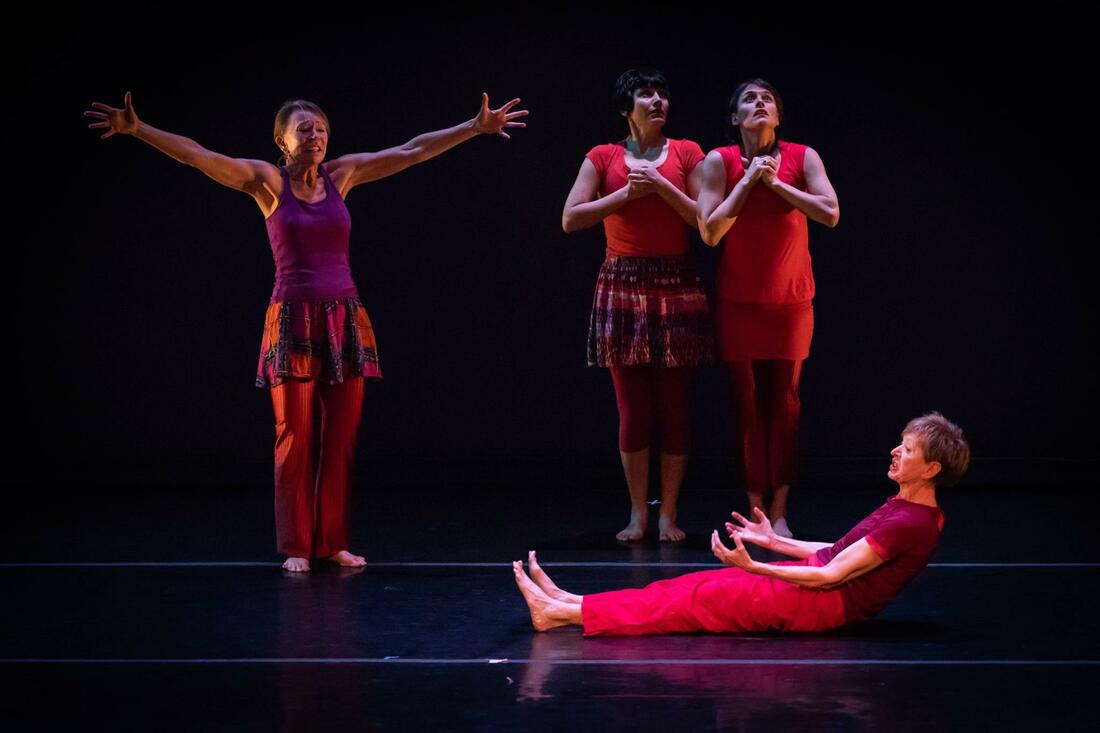
lemon, performed at World Dance Alliance-Americas general assembly 2019. From left to right: Holly Maiz, Sandra Paola López Ramírez, Mindy Grossberg and Linda Rodeck. Photo credit: Adal Rivas
This first part of 2019 has been already full of dance. What a joy! I performed a solo at the Santa Fe Art Institute in Santa Fe, NM, a duet during my MFAIA residency at Goddard in Plainfield, VT, and two ensemble pieces during the World Dance Alliance-Americas general assembly in El Paso, TX. This work has prompted keen reflections on my practice as an improviser and what it is that I am interested in engaging with as a performer. I will share a few of these meanderings over the next few posts.
​ 

on presence
There seems to be a consensus that in order to improvise “well” you need to be present in the here and now. Even though there are differences in the how of the activity, experienced improvisers have developed the ability to respond to what is happening in the moment. But, what happens when performers step “out” during an improvisation? Often in body-centered improvised performance (i.e. movement-based) we will move in and out the delineated performance space, and how that is experienced and negotiated varies from performer to performer. The way that I am articulating what I do— using Action Theater (AT) language— is that I never leave an improvisation until the improvisation is over… not even when exiting the space or going behind the wings. In AT, we are taught: “You are always in.”  But in most of my experiences with improvisers outside of this form, stepping “out” of the space means stepping out of the improvisation, becoming a witness and thus, it is met with a drop of intention or awareness… a relaxing of the mind.

I am interested in a total immersion in the moment and each subsequent moment. No breaks.

This reflection then lead me then to question what I mean by presence and what does it mean to drop or sustain it? I don’t know! The best I can articulate right now how I understand presence is being grounded on relationship; on communing with the improvisation (what is being created) and who (ensemble, audience, land, ancestors) I am creating it with. In this way, improvisation becomes a microcosm of how I want to live my life. A practice treated with reverence where the sacredness of the space and activity in each moment is acknowledged.
Improvisation for me is more than a skilled-based practice, it is a profound spiritual experience where past, present and future, and nothingness and everything coexist.
​Esta primera parte de 2019 ha estado llena de baile. ¡Que alegria! Realicé un solo en el Instituto de Arte de Santa Fe en Nuevo México, un dúo durante mi residencia de mi MFAIA en Goddard en Plainfield, VT, y dos piezas de ensamble durante la asamblea general de World Dance Alliance-Americas en El Paso, Texas. Este trabajo ha provocado profundas reflexiones sobre mi práctica de improvisación y sobre qué es lo que me intereso cómo performer. Compartiré algunas de estas ideas en esta y las siguientes publicaciones.

sobre presencia
Parece haber un consenso que para improvisar "bien" es necesario estar presente en el aquí y ahora. A pesar de que existen diferencias en cómo se hace esta actividad, los improvisadores experimentados han desarrollado la capacidad de responder a lo que está sucediendo en el momento. Pero, ¿qué sucede cuando los artistas se "salen" durante una improvisación? A menudo, en las improvisaciones centradas en el cuerpo (es decir, basadas en el movimiento como en danza o teatro) entramos y salimos del "escenario" y la forma en que esto se negocia varía de un intérprete a otro. La forma en que articulo lo que yo hago, usando el lenguaje de Teatro de Acción (AT), es que nunca me salgo de una improvisación hasta que la improvisación termina ... ni siquiera al salir del espacio o ir detrás del bastidor. En AT, se nos enseña: "Siempre estás adentro." Pero en la mayoría de mis experiencias con improvisadores fuera de esta forma, salir del espacio significa salir de la improvisación, convertirte en testigo y, por lo tanto, se refleja con un bajonazo de intención o conciencia ... un relajamiento de la mente.

Estoy interesada en una inmersión total en este momento y en cada momento posterior. Sin descansos.

Esta reflexión me lleva a cuestionar entonces lo que quiero decir con presencia y qué significa abandonarla o sostenerla. ¡No lo sé! Lo mejor que puedo articular en este momento es que entiendo la presencia como estar centrada en la relación; la comunión con la improvisación (lo que se está creando) y con quién (grupo, audiencia, tierra, antepasados) la estoy creando. De esta manera, la improvisación se convierte en un microcosmo de cómo quiero vivir mi vida. Una práctica tratada con reverencia donde se reconoce lo sagrado del espacio y la actividad en cada momento.

La improvisación para mí es más que una práctica basada en habilidades, es una experiencia espiritual profunda donde el pasado, el presente y el futuro, la nada y el todo coexisten.


My journey on The Road Home

7/14/2018

 
On June 30th, 2018 I collaborated with two wonderful artists, Soulaf Abas (Syria) and Bruce McKaig (United States) on a show we titled The Road Home while we were Equal Justice residents at the Santa Fe Art Institute (SFAI) in Santa Fe, NM. The time at the residency helped me deepen my research on decolonization and resulted in a series of improvised dances that I performed as part of the show. Here are a excerpts on a couple:
El 30 de junio de 2018 colaboré con dos artistas maravillosos, Soulaf Abas (Siria) y Bruce McKaig (Estados Unidos) en un espectáculo que titulamos The Road Home durante nuestra residencia de Equal Justice en el Instituto de Arte de Santa Fe (SFAI) en Nuevo Mexico. El tiempo en la residencia me ayudó a profundizar mi investigación sobre la descolonización y dio como resultado una serie de danzas. Aquí hay algunos segmentos:

Reclaiming indigeniety

Most of my work over the past 5 years has centered around my identity as a queer latinoamericana living in the U.S. Underlying that work, there has been a constant questioning of home, what it is in the constant flux of a migrant society and what it means for me as I create and recreate my identity. Living en la frontera— the U.S.-Mexico border— in the cities of El Paso, TX and Ciudad Juárez, Chihuahua, has heightened this sense of ephemerality of place and has lead me to question how we become native to a region, how and when a new home gets established and what social, political and cultural contexts frame that experience.

This process started me on a journey back to my home, looking at my family lineage and ancestry to see how that informs my corporeality, my relationships and my work. I have framed this research as a decolonizing activity of both my improvisation practice and my family’s history. Building on my previous work, during the month-long residency this took three paths:
La mayor parte de mi trabajo en los últimos 5 años se ha centrado en mi identidad como una latinoamericana queer en los Estados Unidos. Detrás de ese trabajo, hay un cuestionamiento constante del hogar y lo que es dentro del flujo constante de una sociedad migrante,  y lo que significa para mientras creo y recreo mi identidad. Viviendo en la frontera entre Estados Unidos y México— en las ciudades de El Paso, TX y Ciudad Juárez, Chihuahua, ha aumentado este sentido de efemeralidad y me ha llevado a cuestionar cómo nos convertimos en nativos de una región, cómo y cuándo se establece un nuevo hogar, y qué contextos sociales, políticos y culturales enmarcan esa experiencia.

Este proceso inició en un viaje de regreso a mi hogar, observando mi ascendencia familiar y cuestionar cómo esta informa mi corporalidad, mis relaciones y mi trabajo. He enmarcado esta investigación como una actividad descolonizadora tanto de mi práctica de improvisación como de la historia de mi familia. Durante el mes de la residencia esto tomó tres caminos:
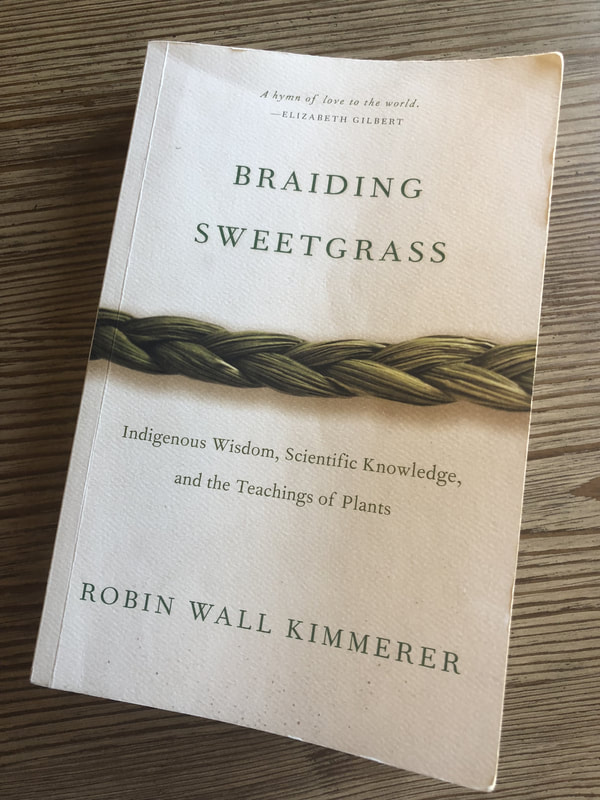
By expanding my understanding of listening and relational presence while remembering how to establish a reciprocal relationship to land and more-than-human nature. This process has been supported by the writings of Robin Wall Kimmerer, specifically her book Braiding Sweetgrass. The wisdom that she carries has inspired me to create a daily ritual of gratitude, look for concrete ways to give back to Mother Earth, and spend more time in the company of (and dancing with) my non-human brothers and sisters.

Honoring African roots

The Latin American vernacular dances that I grew up dancing are grounded deeply in their African roots. By embracing characteristics of the African aesthetic (e.g. body isolations, polyrhythms, dancing closer to the floor) and expanding my current practice to include rhythmic-based improvisation, I aim to decolonize my experience through embodiment.

Making stories

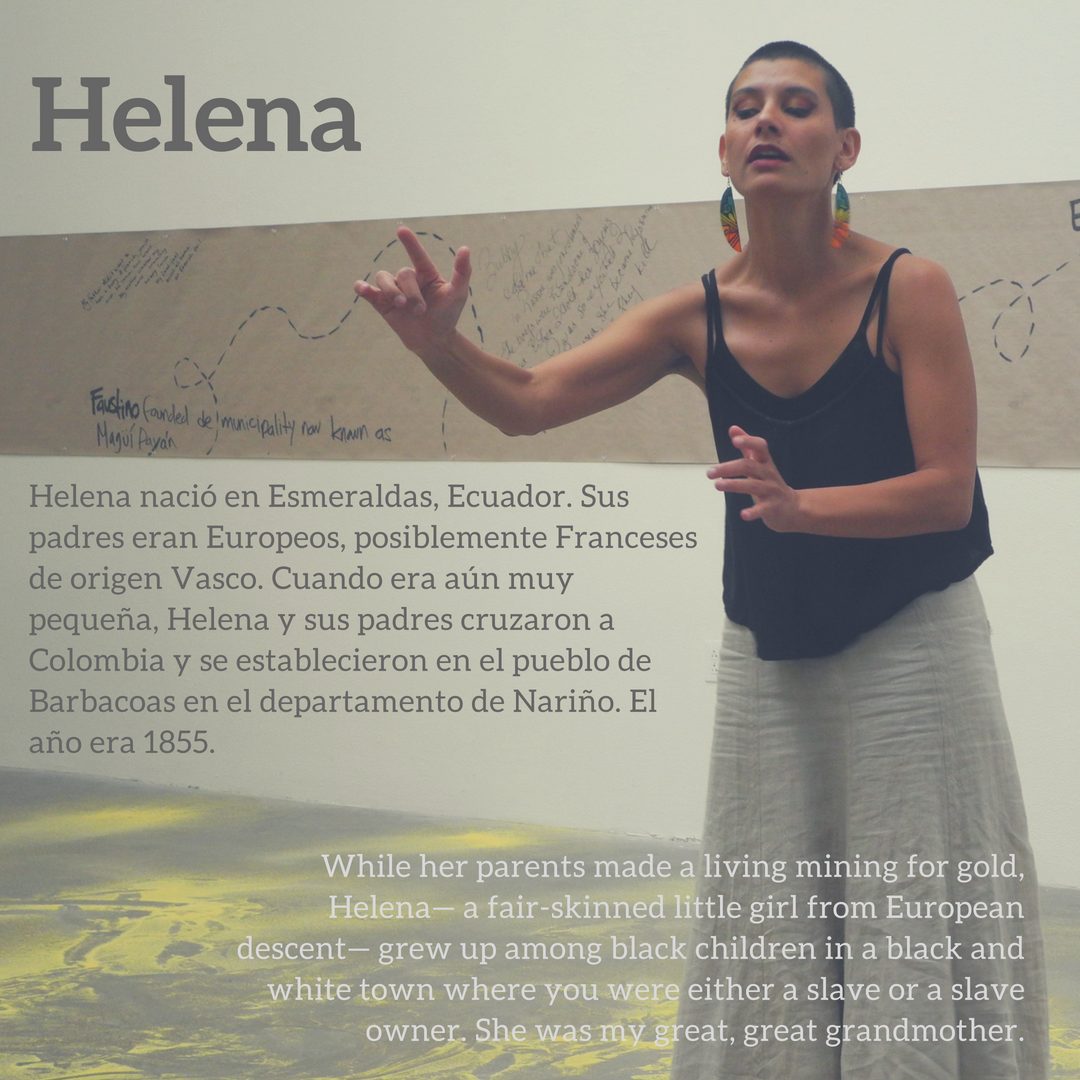
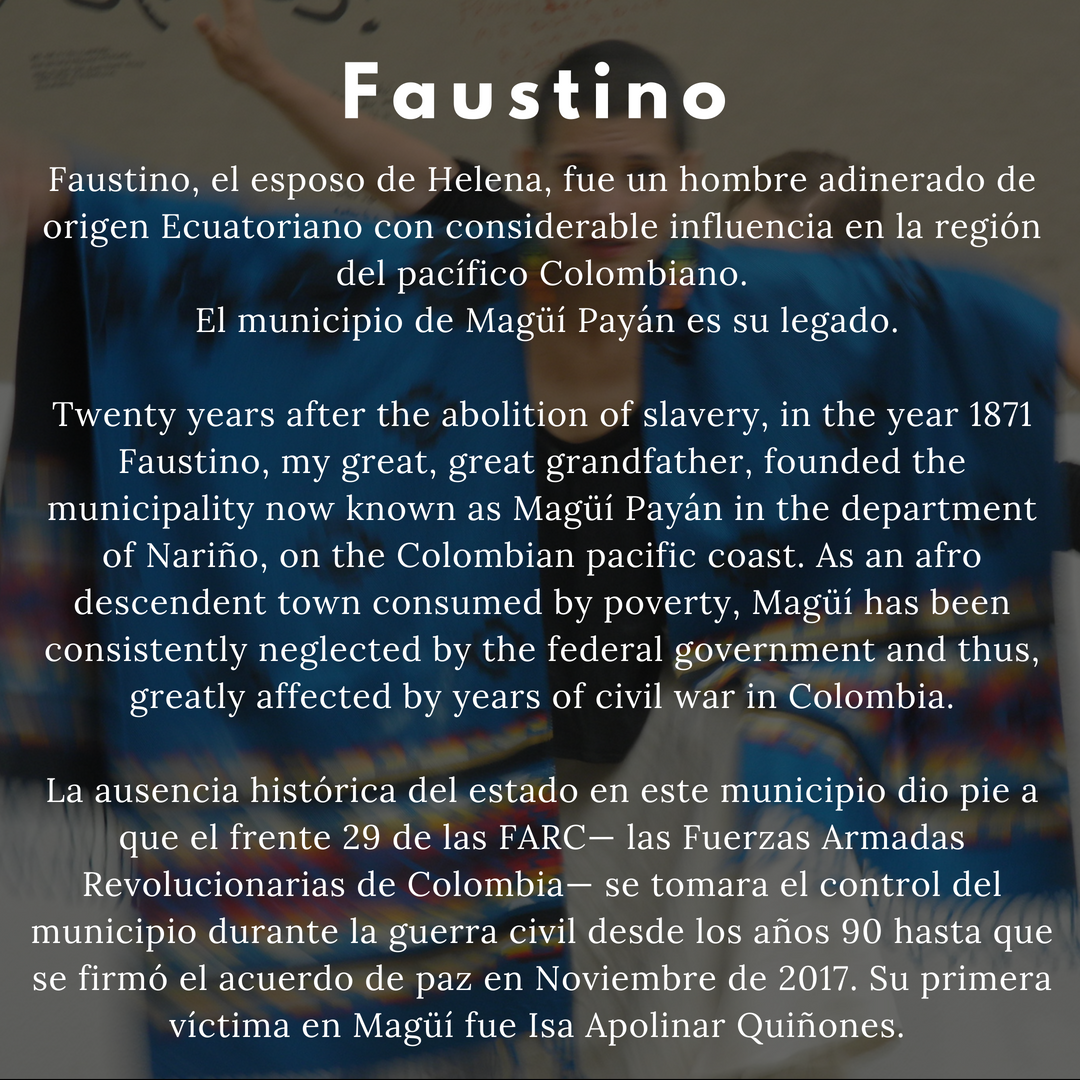
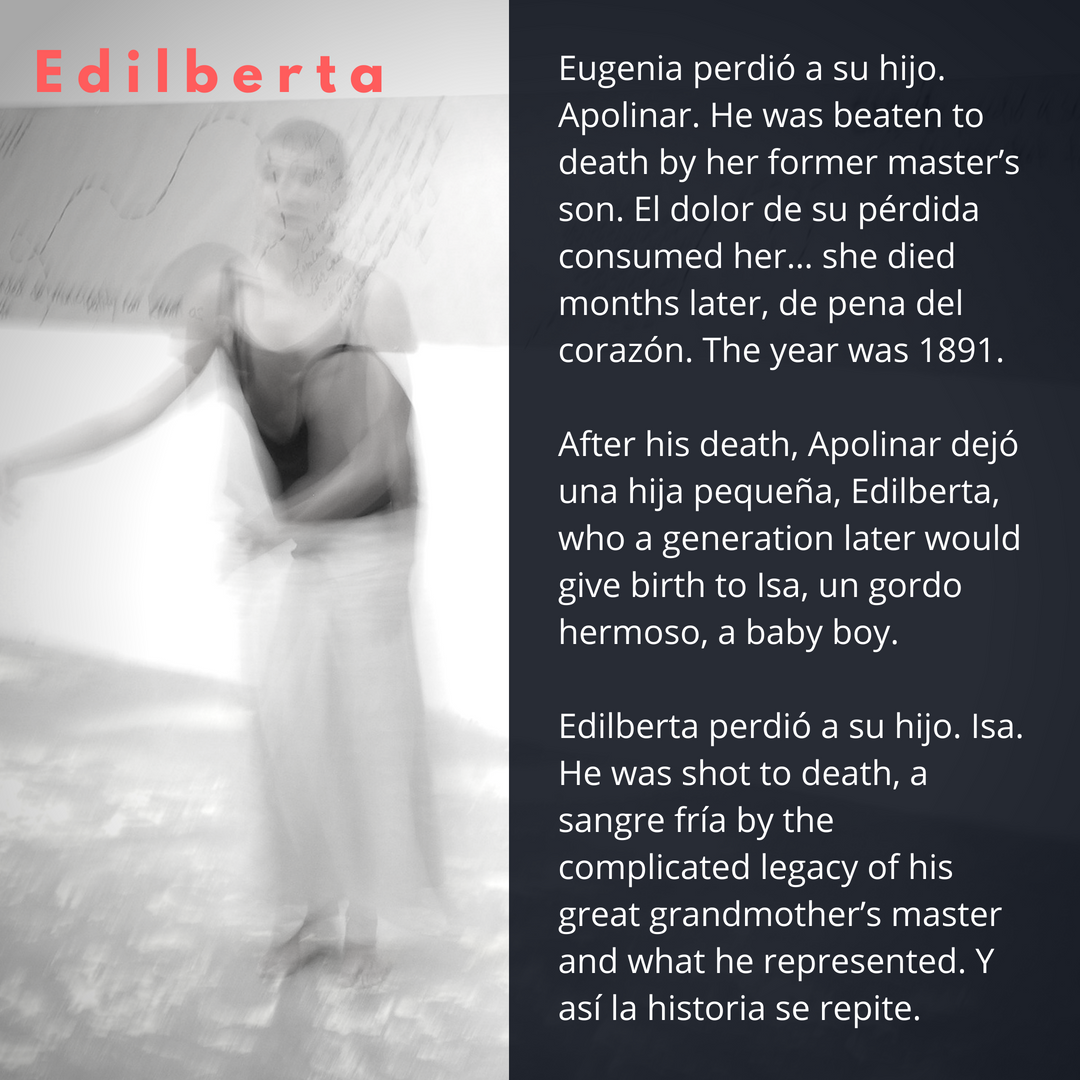
While in residence at SFAI I began to use storymaking as a way to reclaim my lost family lineage. I wrote three short (mostly) fictional stories drawing from memories, stories told and written by family members, historical facts, news articles and documentaries. These have become a space for me to wrestle with the complexities of mi mestizaje and confront the colonial narrative in my family’s past and present in an effort to create an alternative one in the future.
Picture
Picture
Picture

    Archives

    September 2019
    August 2019
    June 2019
    April 2019
    March 2019
    November 2018
    October 2018
    September 2018
    July 2018
    June 2018

    Categories

    All
    Dances
    Improvisation
    Poems
    Why This Blog?

    RSS Feed

Photos by Sara Isasi © 2022
  • Home
  • About
    • Bio
    • Artist Statement
    • Teaching Philosophy
  • embodied research
    • solo work >
      • Bachué
      • redmoonwhitemoonbluemoon
      • Cattleya
    • Collaborations >
      • KOAN
    • site-specific investigations
  • Social Practice
    • cultural organizing
    • dance/performance >
      • transfronteriza
      • Braiding Borders
      • fall/fallen/falling
  • Contact